Louisiana’s Global Roots: Dive into Creole Culture & Heritage
In the lush, sun-soaked landscapes of South Louisiana, a culture runs deeper than the flavor of a slow-simmered roux.
In the lush, sun-soaked landscapes of South Louisiana, a culture runs deeper than the flavor of a slow-simmered roux.
When people hear the term “Creole,” they often picture New Orleans. During the 18th-century colonial period, the city was a port for French, Spanish and Native American traders — and through “creolization,” or the blending of cultural influences, a vibrant, multi-layered identity was born: Louisiana Creole.
What Does “Creole” Mean?
Before the Louisiana Purchase in 1803, the term “Creole” originally described people born in the Louisiana colony (rather than people born in Europe or Africa). While the culture has evolved since then, it remains a distinct entity — unlike the United States’ dominant Anglo-Saxon culture.
Many people wonder if Creole is a racial identity. Rather, the term refers to a specific culture, heritage and ethnicity that is pan-racial and place-based.
Louisiana Creole History
Historically, Creole society was defined by a unique three-tiered social structure, unlike the binary racial systems throughout Europe. The structure recognized:
- White Creoles of European descent, who were rewarded the most political and social power by virtue of their skin color.
- Gens de Couleur Libres (Free People of Color), a class of people who were often educated, owned property and had some social influence.
- Enslaved People of African or Native American descent, who held the least amount of social and political power.
Within this structure, women often held more privilege than in other social systems of the time, though racial status remained a primary political influence.
Louisiana Creole Language: Kouri-Vini
Meet Louisiana’s only indigenous romance language: Kouri-Vini. This language is specific to Louisiana Creole people and is linguistically different from Cajun French.
Known colloquially as the Louisiana Creole language, Kouri-Vini was heavily influenced by West African languages and began as a pidgin, or a simplified language that allowed enslaved people, European colonists and Native Americans to communicate while trading.
Today the language is considered critically endangered, but a dedicated community of “Creolophones” is working to revitalize it. If you explore a Creole community, listen for these common phrases:
- Bonjou/Bonjounou: Hello/Good day
- Bonswa: Good evening
- Komen vou yé?: How are y’all?
Louisiana Creole Faith & Spirituality
In Creole spirituality, Roman Catholicism and Louisiana Voodoo often co-exist. Historians attribute this to Code Noir, the colonial laws that required all enslaved people to be baptized as Roman Catholics. Rather than abandoning their ancestral West African beliefs, many Creoles blended them with Catholic imagery.
Consider these traditions:
- Papa Legba: A Voodoo spirit believed to open the gateway to the divine. He’s often syncretized with St. Peter, believed to hold the keys to Heaven.
- Altars: Creole homes might feature a crucifix alongside traditional offerings for Lwa, or Voodoo spirits.
- Gris-gris: A Voodoo tradition, these bags are filled with charms or herbs used for protection or luck, often worn beneath clothing or placed within the home.

Laura Plantation

Zydeco music

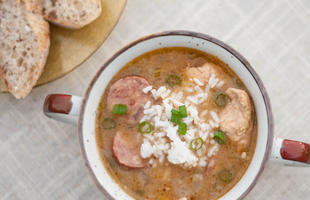
Creole filé gumbo

Creole Heritage Folklife Center
Louisiana Creole Architecture
Creole buildings were designed as clever, functional responses to Louisiana’s intense heat and humidity. When exploring the region, look for these two iconic styles:
- Shotgun houses: These narrow homes feature no hallways. By arranging rooms along the sides of the home’s interior, families could create a “wind tunnel” to pull a breeze through the house.
- Creole cottages: Known for their high, gabled roofs and wide front porches, or galleries, these homes are often raised on piers to protect the living space from frequent flooding.
Louisiana Creole Cooking
Creole cooking is colloquially known as “city food” because it evolved in New Orleans, where chefs had access to global trade by port. Dishes feature ingredients once considered expensive, such as butter, cream and tomatoes.
Almost every savory dish begins with the holy trinity, a sautéed mixture of onions, bell peppers and celery. This base is usually combined with a roux (flour and fat) to create the deep, complex flavors found in Creole gumbo and jambalaya.
Want to try Creole cuisine yourself? Experience authentic dishes at these New Orleans restaurants:
- Dooky Chase's: Considered the premier institution for authentic Creole cuisine, Dooky Chases's has been praised by major figures like Barack Obama, Ernest Gaines and more. Snag a bowl or red beans and rice or delicious gumbo z'herbes.
- Antoines's: Famous for French-Creole classics like Oysters Rockefeller and seafood gumbo.
- Lil' Dizzy's: This casual neighborhood restaurant serves up gumbo, po'boys and more. Get there early — lines often wrap around the block.
Zydeco Music
Head to Southwest Louisiana, and you’ll hear Zydeco. This genre blends blues, R&B, and Black Creole sounds. The lead instrument is usually an accordion, but what really makes the genre distinct is the use of a frottoir — a metal rubboard worn like a vest and played with spoons or bottle openers.
Experience Louisiana Creole Culture
Want to learn more about Louisiana’s incredible Creole history? Check out these museums and festivals.
Must-Visit Museums
- Laura Plantation: Often cited as the best place to understand Louisiana Creole as a cultural system. The tour focuses on the records of the Duparc family and the enslaved people who lived there.
- Vermilionville Living History Museum: A living history and folklife park where artisans demonstrate 18th- and 19th-century Creole, Acadian and Native American traditions.
- Le Musée de f.m.c.: One of the few museums in the country dedicated specifically to the history and legacy of Free People of Color.
- Creole Heritage Folklife Center: Run by folklorist Rebecca Henry, this center focuses on the Black Creole traditions.
Louisiana Creole Festivals
- New Orleans Jazz and Heritage Festival: Held in April and May, this world-renowned celebration showcases the broad spectrum of Louisiana’s musical and culinary traditions.
- Creole Tomato Fest: Love local cuisine? This event honors a key ingredient of Louisiana kitchens, with plenty of fresh dishes and live entertainment.
- NOLA Zydeco Music Festival: Considered to be the state's premier Zydeco festival, experience the high-energy heartbeat of the genre here.
- Holy Ghost Creole Festival: This local favorite offers a deep look at the region’s heritage through its vibrant music and famous food.
Louisiana Creole culture continues to shape the food, music and spirit of the state. Whether you’re tasting a spicy gumbo or dancing to the scrap of a frottoir, you’re participating in a multi-layered heritage that is uniquely Louisianan.