
Historic Homes
Louisiana is home to a number of historic homes. Not only are they architecturally significant, but they also offer the opportunity to learn the stories behind these homes — and the enslaved people who labored there — through educational tours, museums and demonstrations.
Located in Wallace, Louisiana, on the grounds of a historical sugar, rice and indigo plantation established in 1752, is Whitney Plantation. A unique experience, Whitney’s tours focus exclusively on the lives of the enslaved. Through museum exhibits, memorial artwork, restored buildings and hundreds of first-person narratives, visitors to Whitney will gain a unique perspective on the lives of more than 100,000 people who were enslaved in Louisiana.
The Evergreen Plantation tour underlines Louisiana’s history with plantations. It is the most intact plantation complex in the South and includes twenty-two original cabins that enslaved people lived within. Evergreen has documented the site’s archaeological and cultural legacies, and is on the National Register of Historic Places.
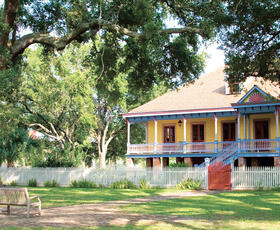
Laura Plantation

Evergreen Plantation

Whitney Plantation
Visit Laura Plantation, where Louisiana historian and folklorist Alcée Fortier first recorded the West African stories of Compair Lapin, known today as the Br’er Rabbit stories. Laura Plantation boasts eleven historic buildings on the National Register, including the cabins where the Compair Lapin stories were recorded. The site offers a permanent exhibit dedicated to telling the authentic story of the enslaved people of this Creole farm. Here, the compelling personal stories of individual men, women and children are told, along with a large collection of purchase documents and rare photographs that bring to light the names and faces of these long-forgotten people.
In North Louisiana visitors can tour Frogmore Plantation & Gins, a working cotton plantation. Available group tours offer visitors a variety of experiences and education, including the history and methods of cotton harvesting from the 1800s through modern day processes; a delta music tour that blends song and narration to relate the trials of life on a plantation; and a Civil War tour about the effects of the war on plantations and the people who lived and worked among them.
These are just a few of the plantations and historic homes open for public tours in Louisiana. Each experience and tour is unique, covering architecture, agriculture and the complicated history of Louisiana.